Cry of the Banshee

“I suppose you know we’re cursed from Hell to Christmas, we Whitmans.” Thus spoke Lord Edward Whitman, nobleman and magistrate of a small hamlet in the late sixteenth century, beset by “the ghosts of the old religion,” father of two sons and a daughter, cruel Sean and more kindly Harry and Maureen, now married to Lady Patricia, his third wife, much younger than him and flighty, scared by noises in the night, the howling of animals.
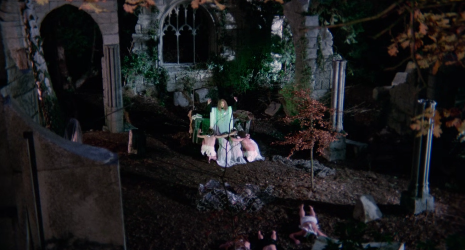
Only able to be soothed by Roderick, the man who works in the stables, a calming presence on her and the animals, it may be insufficient to ease the villagers with livestock killed by a wild dog and witches among them, those accused pointing the finger towards Oona, caught cavorting in the ruins along with her coven but set free in an act of rare mercy by Lord Whitman, one which will not spare him or his family from her wrath.
Released by American International in 1970 and marketed so as to capitalise on their sequence of Edgar Allan Poe adaptations starring Vincent Price which had concluded with The Tomb of Ligeia, in fact Cry of the Banshee was an original story, written by Tim Kelly and Christopher Wicking and directed by Gordon Hessley, though it contains a quote from Poe’s poem The Bells before the title sequence which offers perhaps Terry Gilliam’s most sinister work.
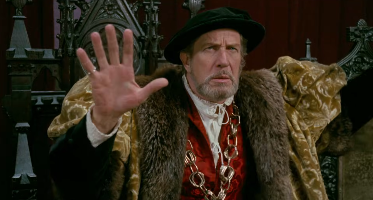
Here Price plays the cruel and goading Lord Edward Whitman without mercy, a cross between two previous characters, Prince Prospero of The Masque of the Red Death and the titular Witchfinder General, tortured by the taint of Satanism under his watch, the howling of the wolves which interrupt his festivities of humiliation and the squabbling of his family, Essy Persson as the fragile Lady Patricia with Stephan Chase, Carl Rigg and Hilary Dwyer, previously tormented by Price in Witchfinder, as Sean, Harry and Maureen.
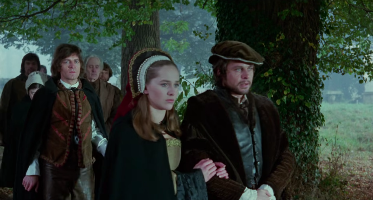
More coherent than many of AP’s fantasias and filmed largely on location, the production values are high, the costumes exquisite and the mansion of Grim’s Dyke familiar from The Blood Beast Terror and Curse of the Crimson Altar, though it would have benefitted from more mystery as to the identity of the avenging force rather than having Roderick (Patrick Mower) step out of from beneath the shadowed trees when summoned by Oona (Elisabeth Bergner).
Cry of the Banshee a film which exists in two radically different forms, both are restored from the original negatives on the new edition from Hammer, the American version cut for nudity and violence and restructured to introduce Oona in the opening scene, with Wilfred Joseph’s faux-Medieval score replaced in its entirety by the more modern stylings of The Dunwich Horror’s Les Baxter, addressing the issue of the invisible harpsichord during the banquet scene but still unable to make the tambourine player keep time.
Cry of the Banshee will be available on 4K UHD and Blu-ray from Hammer from Monday 9th February