Trace of Stones

They are high profile projects which cannot be seen to fail, emblematic of the standing of the ruling Socialist Party, the new power plant and associated cooling plant in the town of Schkona, south of Berlin, Comrade Werner Horrath sent to oversee the site and ease friction between the labour and the management, arriving around the same time as engineer Kathrin Klee begins work.
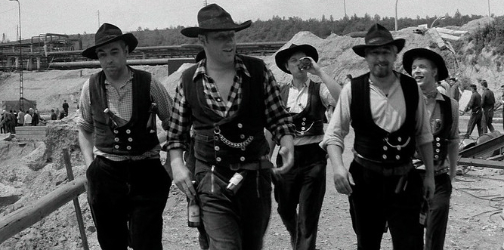
The root of the problem the charismatic but boorish Hannes Balla, his followers who copy his sense of dress known as the Ballas, they are out of control, stealing resources from other departments and challenging colleagues, Horrath’s refusal to capitulate eventually wearing down to an uneasy respect which becomes friendship, the presence of Klee complicating the balance of power when it becomes apparent she is pregnant but refuses to name the father.
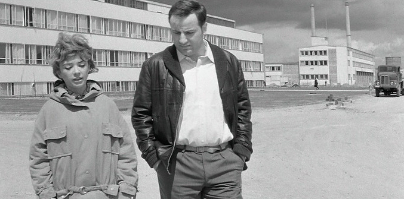
Directed by Frank Beyer and adapted from the novel of the same name by Erik Neutsch, Trace of Stones (Spur der Steine) was released for only a few days in 1966 before it was withdrawn, one of many films banned under the 11th Plenum for expressing views contrary to the values of the German Democratic Republic, though rather than the material being incendiary it is a sympathetic and contemplative character drama of the differing factions attempting to find common ground.
Themes apparently compatible with socialism, working for the collective good of the project, it is personal failings which see Horrath (Eberhard Esche) accused of “immoral behaviour, political and ideological failures” incompatible with his position of authority regardless of the bridges he has built and the work which has been achieved through his guidance and the initiatives he has installed, the performances of the ensemble that of disappointed people haunted by the compromises forced upon them through weakness and circumstance.
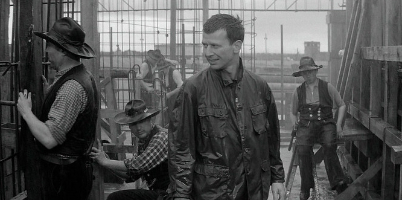
Determined but furious at the way she is initially treated, Klee (Krystyna Stypułkowska, dubbed by Jutta Hoffmann) is a capable professional who irks the men on site by refusing to be dominated by them, becoming the other influence which calms Balla (Manfred Krug), a man who struts and challenges to prove his masculinity when on display but can be very different in private, a charming gentleman who likes to talk and dance and who refrains from using his insight against his friends, loyal even when they are at odds.
Presented on Blu-ray at part of the Masters of Cinema collection, the new edition of Trace of Stones is supported by three archive documentaries, Trace of Time, covering Beyer’s career, regarded as one of East Germany’s most important filmmakers, The 11th Plenum: A Cultural Devastation, and Children’s Home, also banned from 1978 until after the dissolution of the state for the controversial matter it depicts.
Trace of Stones will be available on Blu-ray from Eureka from Monday 18th May