
Boorman and the Devil
It was at the time one of the most talked-about and successful films of the era, The Exorcist released in late 1973 and directed by William Friedkin from a screenplay by William Peter Blatty based on his own novel, nominated for ten Academy Awards including all the major artistic categories and winning two, for best adapted screenplay and sound, a phenomenon which could never be replicated but which left the studio praying for more.
Director John Boorman a rising star following Point Blank and Deliverance, with even the eccentricities of Zardoz making money, it was to him that the unenviable mammoth task fell, aspiring to “express metaphysical ideas in image, sound and character,” determined to make a companion piece which would use the original as a springboard rather than simply recreate the experience with inevitably diminishing returns, crafting “an epic globetrotting thriller about the next stage in human evolution.”

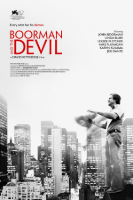
What happened, as detailed in writer and director David Kittredge’s new documentary Boorman and the Devil, was a downward spiral into hell marked by script revisions, sickness, compromises, delays, and a constant battle against a fixed deadline for release, contractually agreed with the cinema chains who had paid upfront for the screening rights months in advance, the disappointment of Exorcist II: The Heretic making it “a movie so hated it inspired legislation.”
Interviewed at length at his home in County Wicklow, near where both Zardoz and Excalibur were shot, Boorman is insightful and sanguine with little need to exorcise any lingering demons, justly proud of his ambition and the events which thwarted it, talking through the whole process of his own unfortunate infection with San Joaquin Valley fever which caused the production to close down for five weeks, the already difficult schedule for a film of that scale impacted beyond recovery, necessitating whole sequences to be simplified or excised completely, crucially in the final act, sacrificed to expedience.

Other contributors, newly recorded and archive, include Linda Blair, also insistent the follow-up take a different direction though not expecting to tap dance for her million dollar supper, and Louise Fletcher who felt she would have been better suited to the first, with recollections of read-throughs with a leading man who would rather be elsewhere who “never made a single suggestion or contribution” towards his character and always wrapped filming at six at the dot, as per his contract.
Boorman and the Devil an insight into the post-mortem of a house of cards, unlike Exorcist III, filmed as Legion in the same way this was envisioned simply as Heretic, while Blatty’s film was unjustly maligned and is now recognised as a compromised masterpiece, Exorcist II will never be a good film, but it is now one which is easier to sympathise with, understanding the grand expectations and the circumstances which betrayed them, and also an appreciation of how much was actually achieved on set, Boorman’s imagination and creative audacity easy to overlook when the folly is all that is remembered.
Glasgow Film Festival continues until Sunday 8th March
Exorcist II: The Heretic is available on Blu-ray from Arrow


