Mercy

Crime out of control in overcrowded cities, exacerbated by homelessness and drugs, it has led to enclaves of segregation where lawlessness has taken over, forcing the justice system to adapt, the Mercy Court an artificial intelligence which acts as judge, jury and executioner, accessing an immense range of information from crime scene analysis, bodycam footage from arresting officers and the wealth of data on the mandated public web, assessing the likelihood of guilt and acting accordingly.
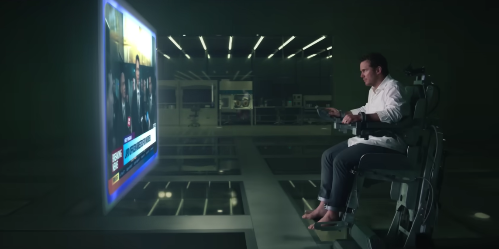
A proponent of Mercy, involved in the very first case and prosecution, Detective Chris Sullivan has struggled since the death of his partner, his marriage failing and secretly drinking, hitting rock bottom when he is arrested in a bar and awakens to find himself case number nineteen in the Mercy court, accused of murdering his wife Nicole that morning and with only ninety minutes to exonerate himself, given access to the details of the case but aware that the evidence confirms he and Nicole argued and suggests that there was nobody else in the house.
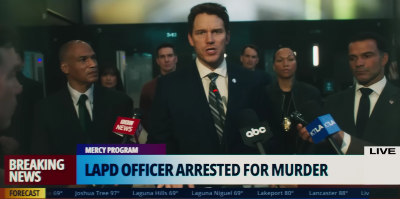
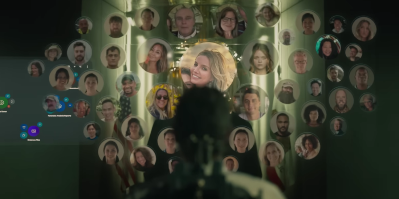
Balancing his drift towards the “screenlife” genre of his more recent films with the epics which established his reputation such as Night Watch and Abraham Lincoln: Vampire Hunter, in Mercy director Timur Bekmanbetov puts The Tomorrow War’s Chris Pratt in the hot seat as the flawed man trying to compartmentalise his grief as he is surrounded by virtual reality recreations of his best days and worst moments, allowed to call colleagues for help as though he were in a game show but with the clock counting down and the odds running heavily against him.
The concept of non-negotiable judgement familiar in science fiction, most often it is a faceless computer as in Star Trek’s Court Martial or The Way Back of Blake’s 7, but here it is manifested as Dune’s Rebecca Ferguson as Judge Maddox, a far cry from the harsh penalties meted out by Judge Dredd but no less firm or unswerving, dedicated solely to process and established evidence, not programmed for empathy or leaps of deduction, Sullivan having to fight his case the hard way and his concealments only amplifying his apparent guilt.
An inverted locked-room mystery where it is the suspect confined to the execution chair, the mechanics of Mercy are simplistic but swift; on her flying quad-bike Officer Diallo (Kali Reis) can be anywhere within the city in minutes, ready to interrogate or intervene, the digital trail to an alternative suspect conveniently less than challenging, substantial momentum gathered as the film moves forward in sometimes improbable leaps, but that is not what Marco van Belle’s script is about.
Set in the not too distant future or August 2029, with the processes of law and independent judiciary currently under assault and suggestions of the abandonment of trial by jury as a right, Mercy is a warning of summary justice, cases built on keywords extracted without consideration of context and trial by opinion shouted before facts are confirmed, but it is significant that it is the humans who are flawed and corruptible, Judge Maddox never in error interpreting the data, but instead presented evidence which is incomplete or has been rigged.
Mercy is currently on general release and also screening in IMAX