
Pilate: The Lost Gospel
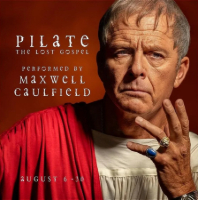
A carved wooden chair, ornate but austere, with a single thin cushion, strictly practical rather than for comfort or relaxation, his papers on the table held in place by a small rock, a flask and silver goblet, and on the wall behind, the banner of the Senatus Populusque Romanus, “The Senate and People of Rome,” the room where the Governor of Judea, Pontius Pilate, is ready to make his statement.
Written by Michael Punter and exploring the gaps in the historic records behind one of the best known stories on the planet, Pilate: The Lost Gospel is an extended monologue delivered by Maxwell Caulfield in simple tunic and robe, his voice and mind clear, a man who has witnessed war and peace, victory and defeat, who has made decisions in what he believed were the best interests of Rome and the people whom he was appointed to serve and represent.
His arrival heralded by fanfare, the child of the mountain people whose name meant “good with the spear” is called to defend his choices but is never defensive, a former centurion who recalls the savagery of the campaign in the Rhineland, one of the few survivors when the 17th Legion was betrayed and massacred, the mud turning red with blood: “pain is the best teacher, and Rome is the finest school; you’ll suffer, but you’ll be glad you did.”
Appointed to the fractious city of Jerusalem by Emperor Tiberius and presenting his perspective on events already apocryphal, Caulfield gives a contemplative version of a man called a monster by the historians who held a grudge against him, calm and complex, determined to help people who who refused attempts to bring water, seeing piety in “looking for miracles to grow in barren earth,” and was maneuvered into killing a man to whom he was indebted in order to maintain peace, a skilled orator of reflection and balance who sees truth as his ally.
Pilate: The Lost Gospel continues Above at the Pleasance Courtyard until Sunday 30th August


