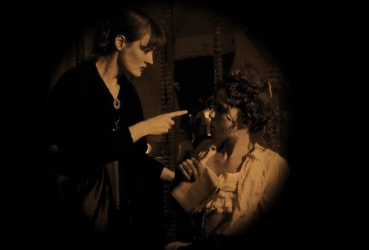
Snapshot
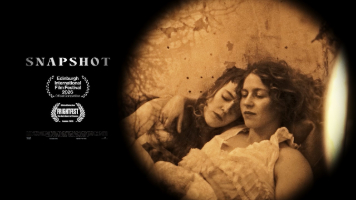
It was in April 2026 that a box containing early short film reels and wax cylinders dating to 1888 were handed to the London Metropolitan Police, triggering a cold case investigation dating back over a century, formerly the property of the late Mrs Minnie Tamworth, née Penworth, the contents the belongings of her husband, also long deceased, early enthusiast of the new medium of photography and its related disciplines.
Now believed to have been among the first to utilise synchronised sound with moving pictures, Mister Tamworth’s archive restored and cut together in chronological order, the first experiments are simple, sepia toned images of statues, of friends posing and at play, but with a matter of great import pressing on the people of Whitechapel, the murder of several women, the feeling being that the Peelers were doing little to protect the streets, Tamworth chronicled the events.
Described at the world premiere as a “family and friends project” by director Joseph Archer who attended alongside screenwriter Cathy Wippell who plays Minnie and many costumed members of the Ladies Ghost Hunting Society who hoped to capture evidence of the spirit world in Mister Tamworth’s invention, Snapshot is ostensibly a pinhole camera found footage thriller, a strange and unique idea but one only partially successful.
With All My Friends Hate Me’s Tom Stourton unseen as the man deftly handling both the Kodak No.1 and the clumsy Edison recorder, both inventions of the late nineteenth century, that the film and sound are better than could have been achieved at the time, the Kodak only capable of one hundred exposures two and half inches in diameter for each roll and a phonograph requiring stability to record vibrations rather than being portable, are conceits allowed and accepted.
Similarly, in costume, location and capturing the feeling of the Victorian era, Snapshot cannot be faulted, a superb technical achievement, the women of the London streets alive and vital even as they are preyed on by the Ripper, some in establishments and some working solo but snubbed by the police and the class system, Minnie’s guardian taking exception to the low company she keeps, while the press sensationalise every scrap of bloody information, truth and women sacrificed to boost bloody circulation.
Where the film falls down is twofold, in the adoption of overtly modern cutting and editing a century before it became commonplace, superimpositions and single insert frames to add jumps and shock value, cheap tactics which undermine the premise of the illusion and considerable artistry elsewhere, and that, as with much found footage cinema, the story has nowhere to go, the twist apparent early on and the potential of a new perspective on the story putting the lost voices of women first frustratingly squandered as it becomes just another sadistic serial killer.
Edinburgh International Film Festival continues until Wednesday 19th August