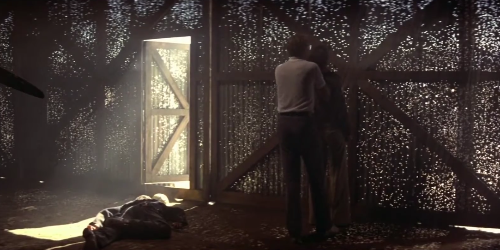
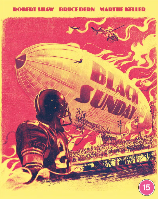
Black Sunday
On the face of it, their tactics of indiscriminate killing would seem to be the same, Israeli counter-terrorist organisation Mossad unleashing a late-night attack on the Beirut house where terrorist group Black September were planning an operation only afterwards found to be an attack on mainland America, forcing the “people who have remained deaf to all the cries of the Palestinian nation [to] share our suffering.”
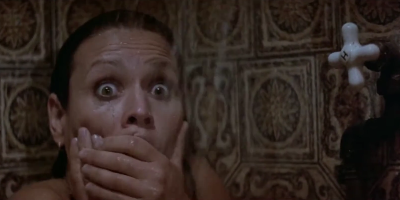
The operation led by David Kabakov, he spares one person inside the house, a woman he found in the shower, maybe having felt sympathy towards her, naked and vulnerable, possibly because he did not consider her to be significant, perhaps because she was obviously unarmed and unable to defend herself, but above all because he did not realise that she was Dahlia Iyad, in fact the mastermind and principal player in the plot to murder 80,000 people.
A former crime reporter, long before he whispered of The Silence of the Lambs, it was in 1975 that Thomas Harris published his first novel, Black Sunday, adapted for John Frankenheimer, director of The Manchurian Candidate, and released in 1977, a thriller epitomising a decade marked by international tensions and unrest with the wars of the previous years settling down into deep grudges and the militarisation of disenfranchised groups who refused to accept the status quo as presented to them, willing to sacrifice themselves and others for their cause.
With Jaws’ Robert Shaw as Kabakov and Marathon Man‘s Marthe Keller as Iyad, they are both damaged people, driven forwards by their own traumas but refusing to see the wreckage they left behind, so intent they are on their goals, but where he has doubts and the fractured remnant of a conscience she is a committed zealot, though one, as is pointed out Kabakov, who was created by the actions of his own government, a victim as much as Bruce Dern’s former prisoner of war Michael Lander.
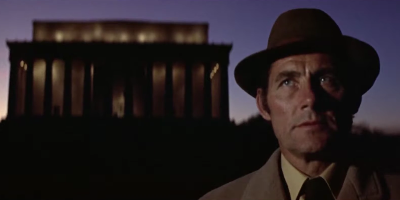
Court-martialled after release because he was coerced into making anti-American statements, he is now a pilot who steers the blimp above the Miami Orange Bowl, host of the Superbowl final, bitter at his treatment by his country and the wife who left him, determined that his name should be remembered by history even for the most terrible of reasons, each of the trio products of a system that provokes and arms confrontations but turns its back on the consequences.
A lesson history repeatedly tries to teach but which those who have the power to make changes will always ignore, making its UK Blu-ray debut Arrow’s new edition of Black Sunday is supported by a commentary by film scholar Josh Nelson, a visual essay by critic Sergio Angelini which places the ambitious production in the context of similar thrillers of the era such as The Taking of Pelham One Two Three and an archive portrait of Frankenheimer with contributions from Kirk Douglas, Samuel L Jackson, Roy Scheider and Rod Steiger.
Black Sunday will be available on Blu-ray from Arrow Films from Monday 9th March