Gaua
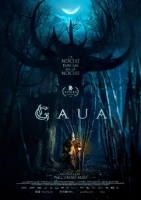
In the forest dark and deep, a hovel is lit by the light of the flickering fire, the woman stirring the soup and adding in pieces of brightly coloured mushrooms to the cauldron as she stares out into the night, hearing voices whisper on the wind, her husband Pello arriving home and telling Kattalin he will be leaving in the morning to speak to the local priest about matters which will improve their situation, noticing that she is not eating much as he consumes the tainted soup.
Waiting for the mushrooms to take effect, Pello passing into a stupor, Kattalin gathers her things and runs into the forest but senses she is being followed; did her husband wake in a rage, or is it something else, a man not bent of leg but a shifting thing of dark branches, twig and horn, Gaueko, master of shadows, god of night? The thing almost upon her, Kattalin falls but is helped by three women of the forest, living alone without the oversight of men, who despite her denials see the truth of her flight.
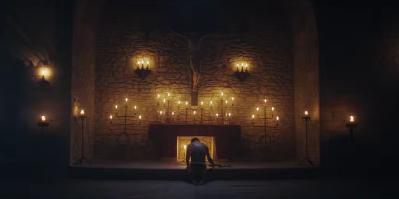
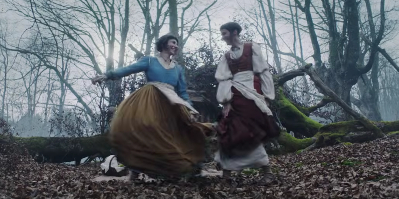
The third film from writer and director Paul Urkijo Alijo, where Errementari and Irati were single narratives Gaua (The Night) is as tangled as the undergrowth through which Kattalin (Yune Nogueiras) stumbles, Graxiana, Beltra and Reme (Elena Irureta, Ane Gabarain and Iñake Irastorza) weaving stories of village jealousies, of pious priest Father Mateo (Manex Fuchs) who spies on girls dancing in autumn leaves, of sickness blamed on witches and their curses, and of the betrayal of Pello (Xabi López).
Set in the Basque Country in the year 1610 and drawing from that folklore, the Catholic Church the stamp upon all that is holy and acceptable, the finger of accusation pointing at those who do not prostrate themselves and are seen as a challenge to its authority, when Kattalin’s close friend Maritxu (Erika Olaizola) falls ill, bedridden and delirious, it is upon the elderly recluse Estertxi (Elena Uriz) that suspicion falls, called a witch and taken to be tortured.
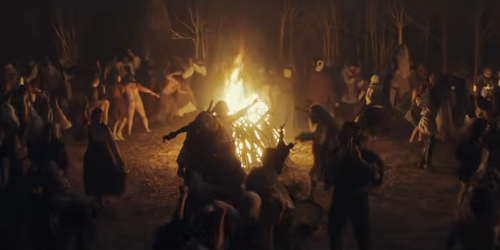
A film of the balance of power between the diurnal and the nocturnal, of the fear of day dwellers of the shadows and the darkness within them that they repress and deny, Gaua is mesmerising and enticing even in its depictions of poverty, disenchantment, ignorance, cruelty and control, those who find a place under the branches more liberated and fulfilled than those who conform to patriarchal expectations of church and marriage, though there is a price to be paid.
With storytelling acting as spells and honesty and forgiveness acts of defiance and rebellion, Gaua embraces darkness and celebrates those who find comfort in its realm of witches, ghosts and demons, the past and its mistakes haunting the present but the seasons changing as each new dawn brings the possibility of change, two worlds always at odds but coexisting in the strange twilight of magic and firelight between.
Gaua’s Scottish premiere took place as part of the Edinburgh Spanish Film Festival