Craze
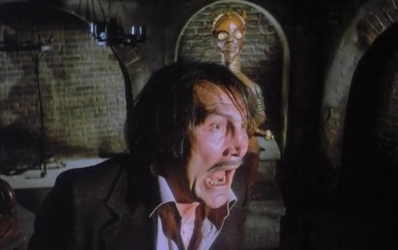
A dealer in antiques and curios, the front of Neal Mottram’s shop is apparently respectable, with Ming vases and brass ornaments whose price tags are as weighty as the objects, but it is a facade which conceals secrets, his rising debts, the business unable to pay suppliers and utility bills, and the cellar beneath where sits the shrine to the totem Chuku.
Mottram and his cult performing black magic ceremonies in return for promised rewards which have failed to materialise, only for blood sacrifice does Chuku respond; the former head of the coven with whom Mottram had quarrelled, a European traveller with no family in town who will not be missed, even Mottram’s aunt, elderly and wealthy, he the beneficiary of her will and exonerated by a carefully arranged alibi.
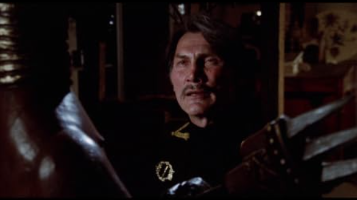
Adapted from Henry Seymour’s 1967 novel The Infernal Idol by Herman Cohen and Aben Kandel, the writers behind I Was a Teenage Werewolf and Horrors of the Black Museum, the horror thriller Craze was released in 1974, directed by the prolific Freddie Francis and incongruously starring the thoroughly American Jack Palance as Mottram, his province and hunting ground London and the home counties.
Something of a curio itself with the former heavyweight boxer and US Army Lieutenant riding rickety British Rail as he seduces and slaughters the women in his path between arranged drops of desirable antiques, despite the salacious and ostensibly depraved subject matter Craze feels flat, the police led by Trial of a Timelord’s Michael Jayston uninspired and the supporting players who include Queen of Spades’ Edith Evans and Yield to the Night’s Diana Dors given little to justify their talent.
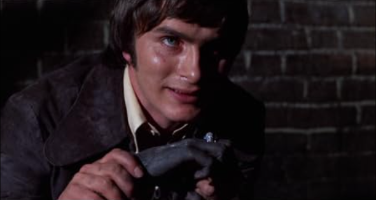
With potentially the most interesting role given to Satan’s Slave’s Martin Potter, it is never capitalised upon, Robbie residing above the shop as Mottram’s “associate” whom he picked up “homeless and hustling old queens,” their relationship hinted at through contact and loyalties which are tested by Mottram’s twinned desire and disdain for women but trapped under the layer of dust which tarnishes the narrative.
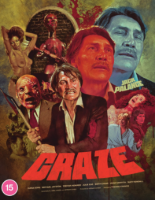
Given a 4K restoration by 88 Films and uncut, earlier versions often trimmed for nudity and gore, the new edition of Craze is supported by an audio commentary by film historians Troy Howarth and Nathaniel Thompson, a discussion of the film by Kim Newman, a featurette on the making of the film and a collection of trailers from the films of Freddie Francis.
Craze is available on Blu-ray and DVD from 88 Films