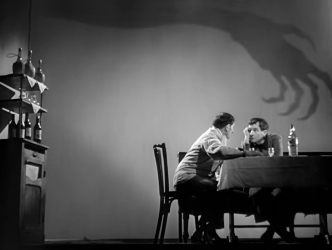
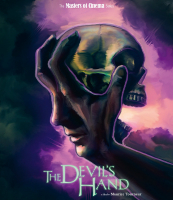
The Devil’s Hand
The snowy mountains under the clouds dampening all noise, from a distance all seems to be peaceful at the remote hotel, but inside the guests are anxious, hungry and impatient, the roads cut off and no provisions coming in, and gunshots heard in the distance; a knock at the door is a one-armed man, looking for the ruins of an abbey, a cemetery.
His name Roland Brissot, an artist, he tells them his story, and it becomes apparent that he was always difficult, brusque, his muse Irene understandably resisting his dubious charms and losing patience with him, his fortunes changing when he is offered “the talisman,” a severed hand which changes his painting style to something eerie and disturbing but brings the fame and success he has sought.
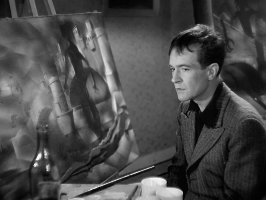
Based on Gérard de Nerval’s 1927 novel La Main du Diable, adapted by Jean-Paul Le Chanois and directed by Maurice Tourneur, The Devil’s Hand was released in 1943, a film of long shadows and dread which hangs over Brissot and his wife Irene (Pierre Fresnay and Josseline Gaël), haunted by the name Maximus Léo which he now signs his paintings and the “little man” (Pierre Palau) who follows him to remind him of his growing debt.
Restored by Gaumont and making its UK Blu-ray debut as part of Eureka’s Masters of Cinema series, The Devil’s Hand is a rare European supernatural horror film made at the time France was occupied, a story of thwarted hope and blind ambition and compromises which must be made to survive and thrive, a deal with the devil which will always end up badly and a debt which doubles every day to an impossible repayment.
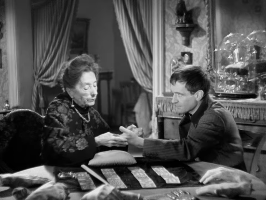
Also known as Carnival of Sinners in reference to the final increasingly surreal scenes of the final act where Brissot meets all those similarly tempted before him, cursed for eternity, The Devil’s Hand is similar in theme to The Monkey’s Paw and All That Money Can Buy, a warning that a bargain with the Devil is always rigged in his favour and that he is, of course, a lawyer who will twist words and time to reclaim his due.
A superb production, dark, moody and sinister, the paintings alone something to behold, slow at first but gathering pace as it progresses, the new edition of The Devil’s Hand is supported by a new audio commentary by film critic James Oliver, an archive documentary on French cinema under German occupation and a video essay by Samm Deighan looking at the context of the film as an act of “subversion and resistance.”
The Devil’s Hand is available on Blu-ray from Eureka now