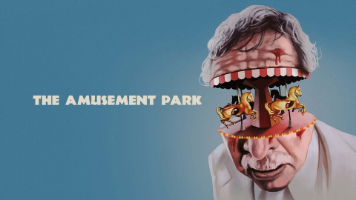
The Amusement Park
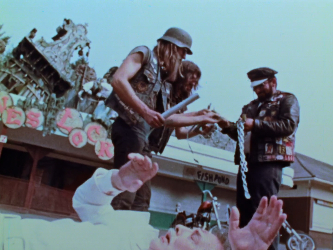
The name George A Romero synonymous with horror, in his career he dabbled with other genres though most often with a dark undercurrent always present, his most unusual film devoid of overt supernatural elements but among his most disturbing, turning his camera in 1975 towards The Amusement Park, a low-budget docudrama abstract social commentary cast almost entirely with non-professional volunteer players.
Introduced by Lincoln Maazel who also plays the unnamed lead character, around seventy at the time of filming and who had not begun his theatrical career until his mid-fifties but who would ultimately live to the age of 106, the premise of Wally Cook’s screenplay is undeniable and stated plainly in the opening monologue, that the elderly deserve better than they have.
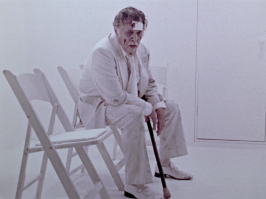
Excluded from society, seen as unproductive, the modern euphemism for those who do not contribute to capitalism “economically inactive,” lacking adequate access to healthcare, good housing, and suffering from poverty and poor nutrition, they have become an unwanted problem that politicians don’t want to talk about or fund support services to address.
The Amusement Park a metaphor for gatekeeping, ableism, ageism and broken promises of hard work and investing now for reward later, it lies through the door of a strange white room where an elderly man sits, bruised and bloodied, exhausted and afraid even as he is invited to explore beyond, despondent and disappointed by life even as his doppelgänger attempts to coax him.
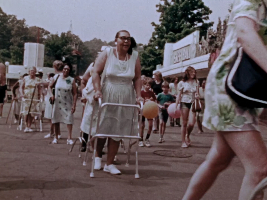
A tragedy of disdain which moves from exclusion to exploitation and abuse, the elderly on their sticks and bad hips, with walkers or in wheelchairs, they are a novelty among the freaks of the fair, an old woman slumps onto a bench resembling a pauper’s rough coffin, ignored while others fight for scraps at the dining tent, though there is always enough for those who can pay, reaching their hands into the pockets of those they should be protecting.
Children kinder than the adults who should be responsible for both them and those no longer able to care for themselves, happiness is transient, a cycle where the past is celebrated but those who survived it are overlooked, an educational film commissioned after Romero released Season of the Witch and The Crazies but felt unsuitable for its intended purpose, dropping out of circulation and considered lost for many years until a 16mm print was discovered and restored, time having moved on but the central issue it presents persisting.
The Amusement Park is streaming on Shudder now